
by Michael D. Anestis, M.S.
Self-help books represent a huge industry, generating millions of dollars in revenue each year. If you go to the psychology section of your local bookstore, you will almost certainly be greeted by a wall of them, each of which proclaiming itself to be the answer to whatever is causing you or your loved ones distress. Some of these books are wonderful and have been shown through research to offer great benefits to readers, but the vast majority of them have not been subject to any form of systematic investigation. Even those that attempt to package components of empirically supported treatments are big question marks, as nobody has tested whether those components, packaged in that particular way, are effective when somebody reads about them on their own rather than meeting with a professional. Certainly they offer testimonials and well credentialed authors and they might very well work extremely well, but without data, we simply do not know if that is the case.
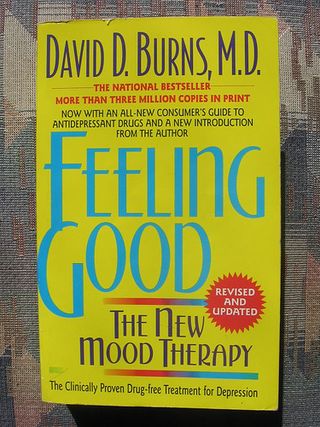
My point here is not to dismiss self-help books as a potentially valuable resource. Again, some of them (e.g., The Feeling Good Handbook ) are known to be of great benefit. Additionally, if self-help books can be successfully implemented, they offer great potential opportunities for individuals suffering from mental illness (e.g., cheaper care, easier widespread dissemination). The issue here is simply that, given the dangers of mental illness and the existence of evidence-based treatments for many of them, there is serious risk in marketing a book as a treatment when we have no evidence to back up that claim.
All of this being said, today I would like to discuss a study by Gerald Haeffel of the University of Notre Dame that was just published in the most recent issue of Behaviour Research and Therapy (2010). Haeffel wanted to examine the degree to which rumination (click here for a description of rumination) and stress impact the degree to which individuals respond to different forms of self-help for depression. To do this, he recruited 271 college freshman and administered a questionnaire that screens for cognitive vulnerabilities to depression. Individuals who scored in the top 40% on this measure were invited to take part in the study and ultimately 72 agreed to participate.
Each participant was randomized into one of three conditions:
- Traditional cognitive self-help
- Non-traditional cognitive self-help
- Academic skills training self-help
All treatment workbooks were created specifically for this study, were approximately 80 pages in length, and included four chapters. Each chapter included seven 15-20 minute daily activities. In the traditional treatment condition, the workbook trained participants to identify negative thoughts, examine the evidence for and against their accuracy, and to develop alternative thoughts that more accurately reflect their situation. In the nontraditional treatment condition, everything was the same except that participants were not taught to identify and challenge negative thoughts. Instead, they were simply taught to generate adaptive thoughts. In the academic skills condition, participants were taught skills such as time management, goal-setting, and memory aids. Every participant filled out measures of depression, stress, and rumination before treatment began, at the end of treatment, and four months after the end of treatment.
Importantly, none of the participants in this study were diagnosed with depression. The average depression scores (as measured by the Beck Depression Inventory-2) at baseline were 9.55 in the traditional treatment, 9.72 in the nontraditional treatment, and 8.1 in the academic skills condition, for a total average of 9.12. To put that in context, BDI-II scores of 10-18 are considered mild and scores below that are considered normal. In other words, on average, participants were not even mildly depressed. A highly depressed individual can score as highly as 63 on this scale.
Okay, back to the study: Haeffel (2010) believed that both cognitive treatment conditions would outperform the academic skills condition and that individuals high in rumination who experienced a lot of stress would experience less improvement in the traditional treatment than the nontraditional treatment. The results were fairly mixed. Surprisingly neither treatment condition outperformed the academic skills group in terms of symptom reduction (and individuals in the traditional treatment condition actually fared worse than those in the academic skills condition). As expected, individuals high in rumination who experienced high levels of stress experienced less symptom reduction than did individuals in the nontraditional treatment both immediately post-treatment and four months later; however, individuals high in stress did not perform better in either treatment condition than they did in the academic skills condition, which raises serious questions regarding whether either treatment actually bestowed any real benefit.
Haeffel (2010) noted that individuals who ruminate might not thrive in a self-help format that requires identification and challenging of negative thoughts, presumably because they may end up simply ruminating about those thoughts rather than challenging them in the absence of training from a therapist. This, of course, is entirely possible, but there are a number of obstacles that prevent us from being able to accept that notion as fact. First of all, there was no measure of skill in implementing that particular component of treatment so, while this is the only aspect of treatment that differed between the traditional and nontraditional approaches, we still actually do not have any evidence that these folks were failing to do what the workbook told them to do. Secondly, given that the symptoms of depression were so low in the entire sample and neither treatment group outperformed an academic skills training group, there is legitimate reason to wonder whether we can examine the utility of a treatment for depression in this sample. In other words, nondepressed college freshmen might be more in need of academic skills training than in depression treatment, particularly given that participants were told at the onset of the study that the goal was to "help freshmen adjust to college life." These folks were not depressed, were not looking for depression treatment, and were told that they were receiving an intervention with an entirely different goal. When individuals buy self-help books for depression, they do so because they are looking for help with depression (and, presumably, because they are at least mildly depressed), so the structure of this study really handicapped what we could learn about the utility of the interventions. Given that the participants were not depressed, they may very well have simply not even done the work involved in either treatment condition (no information was available regarding that point), meaning that the lack of motivation for treatment could hinder results. My third major concern with this study was the use of workbooks created purely for this particular investigation. In other words, rather than looking at a well-tested self-help book for depression (e.g., The Feeling Good Handbook
), the authors simply created one. The quality of that book and its comparability to more well-established books is unknown.
Now, obviously I raised a number of concerns with this study in the previous paragraph, but my point is not to trash the work of Haeffel (2010), as he took it upon himself to investigate an incredibly important issue and to call attention to a topic rarely discussed: what do we really know about the self-help books being marketed to individuals suffering from depression or other mental illnesses? Ultimately, the unfortunate answer is "very little," although the degree of support varies from book to book (I'll do some research on this and make it the subject of another PBB post at a later date). This means that, when individuals are considering various paths towards treatment, they should be somewhat skeptical of claims made by the books that are readily available to them. If you are considering buying a particular book, try to determine if any studies have been done demonstrating that the book actually produces results. Even if it is a book that teaches cognitive behavioral therapy skills for depression, you should ask whether there is any evidence that it produces the same results as cognitive behavioral therapy conducted with an actual therapist.
Haeffel's (2010) results do shine some light on some rather important issues. For instance, it appears that individuals with low levels of depression might not experience any real benefit from self-help books that are sold but untested (and the untested workbooks created specifically for this study serve as a good model for many of the books on the market in this sense, even if these books are actually better than most).
As I write this, I realize that some readers may wonder whether I am raising these questions simply because of my profession. After all, wouldn't effective self-help books push psychologists out of the therapy market? I actually don't think that they would, but regardless, I do not intend to make the bulk of my living through clinical practice and, as such, I really do not stand to benefit one way or another from this. If bibliotherapy outperforms actual therapy with a therapist for particular conditions, I'll simply write about and research bibliotherapy and adjust with the new information provided to us through science. The bottom line is, I really do believe that self-help books have the potential to be a great tool; I just also happen to believe that we should test these books rather than assuming they work, even if they are based upon well-supported principles from therapy conducted with a therapist.
This, of course, runs parallel to a number of other interesting questions regarding treatment delivery. For instance, can treatment be delivered effectively online? Can treatment be performed in digital worlds through formats like "Second Life" or even "World of Warcraft?" As new technologies emerge, my hope is that scientific standards remain high (or better yet, improve) and that the potentially wonderful tools are tested to ensure that they produce the results we all hope they produce.
In the meantime, I would love to hear your thoughts about alternative treatment delivery. I know there is some research on various methods (and we've covered some of them on PBB in the past), but if you know of particularly interesting studies, let us know. Better yet, let our readers know by describing them in a comment. Do you think there are ethical considerations in these treatments that differ from those of traditional therapy? There are so many questions we could cover on this topic and I look forward to reading your thoughts.
************
If you would like to learn more about the topics covered on PBB, we recommend our online store of scientifically-based psychological resources.
Mike Anestis is a doctoral candidate in the clinical psychology department at Florida State University


 Subscribe in a reader