
by Michael D. Anestis, M.S.
Self-injurious thoughts and behaviors (SITBs), a category that includes both suicidal behaviors (e.g., suicidal thoughts or attempts) and non-suicidal self-injury (NSSI), have been the subject of numerous past PBB articles. Our articles on NSSI in particular have, in large part, centered on Matt Nock and Mitch Prinstein's (2004) functional model, which presents a framework through which to understand the different reasons why individuals engage in self-injurious behaviors. In the newest issue of the Journal of Abnormal Psychology, Nock and Prinstein, and Sonya Sterba (2009) have described some fairly remarkable new data on this topic and I would like to discuss the results of their study today.
Nock, Prinstein, and Sterba (2009) noted that past studies on SITBs have been limited by two significant factors:
- Because the scientific process typically involves a deductive approach - specific theory-based hypotheses are generated and subsequently tested - researchers have based much of their understanding of SITBs on beliefs generated from a distance rather than from direct observation of the ways in which these phenomena naturally occur.
- Past studies have relied upon retrospective self-report recollections and have therefore relied upon the honesty and accuracy of memories of participants. Such methods, while valuable, are vulnerable to biases, inaccuracies, and other limitations.
Recent technological developments, particularly ecological momentary assessment (EMA) methods, have enabled researchers to take an entirely different approach to understanding these and other phenomena. In EMA studies, participants report behaviors, emotions, and other variables in real time, often through the use of palm top computers that they carry with them over the course of numerous days or weeks. By utilizing these methods, researchers can observe relationships in an environment much more representative of daily life than a laboratory setting.
With that in mind, the authors had four primary goals in their study:
- To observe the basic form of SITBs (e.g., frequency, intensity, duration)
- To observe the context of SITBs (e.g., when do these thoughts and behaviors occur? what are people typically doing at that time? who are they typically with at that moment?)
- To observe the proximal risk factors for SITBs (e.g., what predicts when an individual is most likely to experience SITBs?)
- To observe the functions of SITBs (e.g., why do individuals have these experiences?)
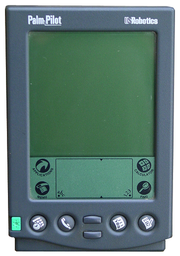
To accomplish these goals, the authors recruited 30 adolescents and young adults from a larger community sample on NSSI. To be included in the study, the participants had to have reported experiencing thoughts of NSSI within the previous two weeks and had to have access to a computer. Each participant carried a personal digital assistant (PDA) palm-top computer for at least 14 days, with some individuals keeping theirs longer due to difficulty getting back to the lab in precisely 14 days. Twice each day - at mid-day and end-of-day - the PDA would beep, signaling for the participant to complete survey information. Additionally, participants were told to fill out those same surveys on the PDA any time they experienced a self-destructive thought or behavior. Individuals whose responses indicated imminent risk of serious injury or who did not respond for three days were contacted by phone for risk assessments and participants who responded to at least 80% of the twice-daily prompts were paid $100 or allowed to keep the PDA.
Over the course of the 14-day study, the study revealed 1,262 thought and behavior episodes. After analyzing these data, the authors reported a number of interesting findings.
Frequency, duration, and severity of thoughts and behavior
NSSI thoughts were reported, on average, as registering at moderate-to-severe intensity. Suicidal thoughts, on the other hand, were typically reported as registering at mild-to-moderate severity. Suicidal thoughts tended to last longer than did NSSI thoughts, indicating that they were a more intense and time consuming phenomenon than were NSSI thoughts. NSSI thoughts transitioned to NSSI behavior when the thoughts were of greater intensity and when the thoughts were shorter. In other words, short intense thoughts of self-injury were most likely to result in actual NSSI behavior.
Overlap of NSSI and suicidal thoughts
Importantly, whereas suicidal thoughts were accompanied by thoughts of NSSI 42.3% of the time, NSSI thoughts were accompanied by suicidal thoughts only 1.0%-4.2% of the time. This clearly highlights the importance of considering these two phenomena separately from one another rather than collapsing them into a single category such as parasuicidal ideation.
Context of SITBs
When suicidal and NSSI thoughts began, participants most often reported that they were socializing, resting, or listening to music. Participants reported using drugs or alcohol during only 0.0%-4.8% of their self-injurious thoughts, meaning that far more often than not, participants were sober while having such thoughts.
In terms of events leading up to SITBs, NSSI thoughts were most frequently preceded by worry, experiencing a bad memory, or feeling pressure. Suicidal thoughts were frequently preceded by that same list as well as arguments with other people. In a small minority of cases of suicidal and NSSI behaviors (1.7%-3.8%), participants reported engaging in the behavior after being encouraged by others to do so. Even at such a low frequency rate, the authors noted that this is a disturbing finding.
In terms of emotions, NSSI thoughts were most often experienced while the participants were feeling sad/worthless, overwhelmed, or scared/anxious. These latter two, however, did not predict NSSI behavior. Anger towards oneself, rejection, self-hatred, numbness, and anger towards others increased the likelihood of NSSI behavior whereas feelings of sadness/worthlessness decreased the likelihood of NSSI behavior. There was a wide range of emotional states that accompanied suicidal thoughts, with results suggesting that these thoughts were preceded by more extreme levels of negative emotions than were NSSI thoughts.
Function of NSSI
If you have not read our prior description of the functional model of NSSI, I recommend consulting that article in order to better understand this section of results. Nock, Prinstein, and Sterba (2009) reported that, by far, the most frequently endorsed function of NSSI was intrapersonal-negative reinforcement (64.7%). This function entails the use of a behavior in order to reduce an unwanted internal experience (e.g., negative emotions). Participants reported that NSSI motivated by this function most often involved efforts to reduce anxiety (34.8%), sadness (24.2%), anger (19.7%), bad thoughts (28.8%), or bad memories (13.6%). The second most common function was intrapersonal-positive reinforcement (24.5%), which entailed utilizing self-injury to increase a desired internal state (e.g., to feel something, even if it is pain). The third most common function was interpersonal-negative reinforcement (14.7%), which entails engaging in NSSI to reduce expectations or stop the behavior of another person. The least frequently reported function of NSSI was interpersonal-positive reinforcement (3.9%), which entails engaging in NSSI in an effort to get another individual to do something. This, of course, flies in the face of the commonly held belief that self-injurious behavior is typically an attempt to manipulate other people and instead supports that idea that vast the majority of NSSI episodes represent efforts on the part of the individual to regulate their own emotional states.
Avoiding self-injurious behaviors
What about the individuals who experienced thoughts of self-injury but did not engage in actual behaviors? How did they manage to avoid making that harmful transition? The authors reported that the most frequent methods used to keep from engaging in actual self-injurious behaviors were changing thoughts, talking to someone, or engaging in distracting activities (e.g., work/homework, going out, using computer). This, of course, provides valuable insight into how vulnerable individuals respond to dangerous thoughts and attempt to prevent themselves from acting on dangerous impulses.
So what can we learn from this study?
Nock, Prinstein, and Sterba's (2009) work provided us with a rare glimpse into the ways in which SITBs are experienced in daily life. Like any study, there were limitations. The degree to which these results generalize beyond adolescents and young adults already vulnerable to such outcomes is unknown and the very act of observing thoughts and behaviors could theoretically impact the manner in which they are experienced. Without question, however, the results are insightful and provide a basic foundation upon which to build future work. The authors were careful to point out that, before we can be certain that these patterns represent common trends, they need to be replicated independently in different samples. That being said, these observations provided some powerful insights into how often self-injurious thoughts and behaviors occur in vulnerable adolescents and young adults, what prompts such outcomes, and why such individuals feel compelled to engage in NSSI. Additionally, they provided compelling evidence that suicidal and non-suicidal thoughts truly represent distinct phenomena better examined and conceptualized separately from one another than as part of a broader group of experiences. I always come away incredibly impressed after reading research by these folks and this was definitely not an exception to that rule.
*************
If you would like to learn more about SITBs, we recommend the following items, all of which are available through our online store of scientifically-based psychological resources:
- Why People Die by Suicide
 by Thomas Joiner
- Treating Suicidal Behavior: An Effective, Time-Limited Approach
 by David Rudd, Thomas Joiner, and Hasan Rajab
- The Interpersonal Theory of Suicide: Guidance for Working With Suicidal Clients
 by Thomas Joiner, Kim Van Orden, Tracy Witte, and David Rudd
-
Understanding Nonsuicidal Self-Injury: Origins, Assessment, and Treatment
 by Matthew Nock
Mike Anestis is a doctoral candidate in the clinical psychology department at Florida State University


 Subscribe in a reader