
by Michael D. Anestis, M.S.
Today marks a rather important development. The DSM-V Development Website (click here to access the site) was just posted online and changes to diagnoses and diagnostic criteria are explained in detail. In some areas, the changes are fairly small. In others, sweeping changes are suggested. Readers have the ability to register at no cost and, once they do so, they can leave comments regarding any of the changes. Hopefully people will be responsible in their comments and leave constructive thoughts, although it will be hard to keep emotions at bay on such an important issue.
The site itself contains a substantial amount of information, some of which requires a fairly close reading to be fully understood, so I am still working my way through all of it. That being said, at first glance, I've noticed several things including:
- It appears Asperger's syndrome, autism, and PDDNOS will be collapsed into a single diagnostic continuum rather than remaining as distinct diagnoses.
- The section on personality disorders is being significantly revised - more so than any other portion of the book. This, in my opinion, is good news. Although a lot of strong research has been conducted on PD's, there are many flaws with the categories and criteria in that section. The new system will focus on assessing the degree to which clients exhibit elevations on particular components of personality characteristics. Broad groups of characteristics are subdivided into small groups of traits related to that topic.
- The concept of psychopathy is being reintegrated into the diagnostic picture
- A greater focus is being place on determining the severity of pathology as opposed to simply determining if a diagnosis is warranted.
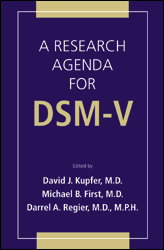
I highly encourage all readers to spend time on the DSM-V website and to not only read the proposed changes, but also the rationale for those changes. The new book will not be perfect, but they are clearly making an effort to reduce the amount of subjectivity involved in diagnostics and to base more of the system on clear empirical research. That being said, when concepts are unclear or the evidence for a claim is weak, that is an important point to make and a valuable contribution to the discussion.
As you browse the site, I hope that you will share your thoughts here and open up discussions about the proposed changes. In some cases, we will likely devote future articles to some of these topics. In other cases, the bulk of the conversation is likely to take place amongst us and readers in the comment sections of this and other articles. To take part in such conversations, you can leave a comment yourself and/or subscribe to the comment feed so that you will receive notification when others add to the conversation.
Additionally, in the past, we have already covered a number of the changes being proposed in the DSM-V. If you would like to read more about those changes and learn more about the evidence fueling those plans, I recommend clicking here, which will take you to a page that summarizes our DSM-V coverage and provides links to individual topics.
I'm looking forward to hearing your thoughts on this remarkably important topic.
************
If you would like to learn more about the topics discussed on PBB, we recommend consulting our online store of scientifically-based psychological resources.
Mike Anestis is a doctoral candidate in the clinical psychology department at Florida State University


 Subscribe in a reader