by Joye C. Anestis
Over the past few years, I've watched the vaccination-autism controversy with great interest. Just in case you're not aware of this issue, a group of people have been arguing, since the release of a paper in 1998 I'll discuss below, that childhood vaccinations cause autism in certain children. At least three theories exist which attempt to explain a causal link between vaccines and autism: 1) the MMR vaccine (a combination vaccine for measles, mumps, and rubella) causes intestinal damage which in turn causes autism, 2) the preservative thimerosal (which contains mercury) in some vaccines is toxic and causes autism, and 3) the vaccination schedule which involves the administration of multiple vaccines at once overwhelms or weakens the nervous system, causing autism. The result of this theory has been an increased public awareness of autism (good) and a decreased rate of childhood vaccinations (bad). The problem is that no scientific evidence exists to support the link between vaccinations and autism. In fact, multiple studies do exist that show no link between the two (and these studies have been conducted by multiple investigators in multiple countries). For an excellent review of the extant literature, see Gerber & Offit (2009) in the journal Clinical Infectious Diseases. These authors found that no evidence exists to support any of the 3 vaccine hypotheses mentioned above.
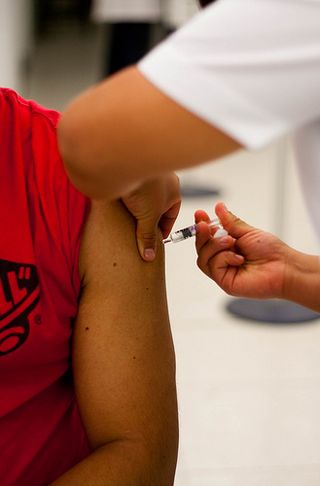
This all got started with the publication of a study in 1998 by Dr. Andrew Wakefield in The Lancet, a well-respected British medical journal. In this paper, Dr. Wakefield suggested a possible relationship between the MMR vaccine and autism, after observing 8 children (from his sample of 12) who had symptoms of autism arise within 1 month of receiving the MMR vacccine, in conjunction with gastrointestinal symptoms. He theorized that the "MMR vaccine caused intestinal inflammation that led to translocation of usually nonpermeable peptides to the bloodstream and, subsequently, to the brain, where they affected development " (Gerber & Offit, 2009, p. 456; Wakefield, 1998). This week, The Lancet retracted this study (you can read the retraction here). The retraction came following a decision by the UK General Medical Council's Fitness to Practice Panel. The General Medical Council is the organization that registers doctors to practice medicine in the UK, and the Fitness to Practice Panel conducts hearings on whether a physician's fitness to practice is impaired. I have listed some of many conclusions they drew (you can read the full hearing here, but I warn you, it is boring and really long). Some are directly related to the Lancet study, others address general unethical practices by Dr. Wakefield (and just to be clear, 2 other authors of the paper were censured by the panel as well):
- Dr. Wakefield and his co-authors misrepresented the subjects on their study. They reported that the children were routine referrals to their gastroenterology department, which is untrue. The panel also noted that, when the sample was challenged by peers, Dr. Wakefield lied.
- Dr. Wakefield did not have ethical approval for some of the procedures used.
- Dr. Wakefield failed to disclose that he was involved with MMR litigation at the time of the Lancet study which represented a significant conflict of interest. He had received a large consulting fee from the lawyers of some of the subjects' parents who were involved in litigation arguing that the vaccine caused their child's autism.
- Nine months before publishing the Lancet study, Dr. Wakefield applied for a patent for a new MMR vaccine. Thus, he stood to profit considerably from public fear of the current MMR vaccine.
- At his son's birthday party, he drew blood from a number of children for research purposes and paid them a reward afterward (certainly not part of the Lancet study but definitely not an ok thing to do!).
The retraction was based on ethical violations from the study authors. It is important to note, though, that several methodological concerns about the study have been raised by others. These include: lack of a control group, without which the association could purely be coincidence (in fact, considering that vaccines are given around the age at which autism symptoms generally present, it is highly plausible that it is a coincidence); investigators administering the test were not blind to the nature of the study; GI symptoms did not precede autism symptoms in some of the subjects; the MMR vaccine has not been associated with intestinal problems; and peptides traveling from the intestines to the brain has never been observed (Gerber & Offit, 2009).
Unfortunately, I fear that this retraction is too little, too late. Vaccination fears seem to be pervasive in our society (at least from my own anecdotal observations). For example, I know of pregnant women trying to get a flu vaccine this year who were denied at certain venues because the vaccine contained thimerosal. Litigation fears at places like Walgreen's are getting in the way of preventing maternal influenza - incidentally, second trimester maternal influenza has been reliably linked in multiple studies to an increased risk of schizophrenia and other serious mental illness in the baby. Plus, think about the years and money wasted researching the autism-vaccination link that could have been spent making real discoveries about this devastating disorder. Thankfully, retractions like this are rare (although it is scary to think about how many studies out there haven't been investigated and maybe should be). But this instance really highlights the importance of ethical research practice - obviously, some studies stand to make a big splash and many lives are affected by immoral reporting procedures.
Joye Anestis is a doctoral candidate in clinical psychology at Florida State University.


 Subscribe in a reader