
by Michael D. Anestis, M.S.
Welcome back to PBB. It's been a chaotic couple of weeks for us and the site will be making a transition of sorts as Joye takes the lead and I begin my internship. I'm not done writing by any means, but my posts will be much less regular for a while.
I had several topics ready for tonight's post, but everything changed when my colleague - Kelly Caron - pointed me towards this mind-boggling article written on the Huffington Post by a psychiatrist named Peter Breggin (click here to read the article). In the article, Breggin attempts to make the case that mental illness diagnoses are harmful and based on nothing but opinion (an ironic criticism given that he bases this on his opinion). As you might guess, I disagree wholeheartedly with his conclusions.
As I have done in the past, I will paste a comment from the original article in italics and then write my retort below it.
"In reality, psychiatric diagnosing is a kind of spiritual profiling that can destroy lives and frequently does."
I'm not even certain I understand what "spiritual profiling" means, but it certainly sounds awful. My assumption is that Breggin is claiming that a mental illness diagnosis is a criticism of an individual's character, a critique of who they are as an individual. This is completely untrue. A mental illness diagnosis is a recognition that an individual is experiencing a group of systems that often cluster together and which have been shown to respond to a particular treatment or set of treatments, some of which are pharmacological and some of which are psychosocial. No therapist should imply that a diagnosis is some sort of character flaw or a description of the sum of an individual's personality. If they do, the problem is with the therapist, not the diagnosis.
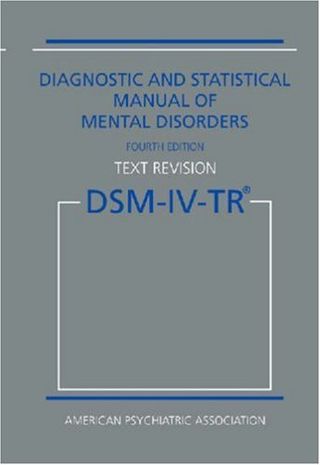
"First, there's the obvious cookie cutter problem. People can't be easily fit into the prefabricated labels contained in the Diagnostic and Statistical Manual of Mental Disorders from whence all official diagnoses emanate. Diagnoses frequently change, often in an effort to justify this or that drug. It's not realistic, enlightening or empowering to reduce yourself or your child to one of these diagnoses. Psychiatric diagnoses are simplistic."
If Dr.Breggin's point is that diagnoses are imperfect, he's spot on. This does not seem to be his point, however. He seems to be saying that the diagnostic categories never properly fit individuals' presenting problems. On what does he base this claim? Again, nobody is saying that panic disorder, depression, borderline personality disorder, or any other diagnosis explains the depths of an individual's soul. They are simply saying that individuals often present with a particular cluster of symptoms and that research has enabled us to learn a lot about those symptoms and how to treat them. Sometimes, an individual meets criteria for more than one diagnosis (in fact, this is the norm). Sometimes, an individual's symptoms do not fit the criteria well but still cause significant impairment and/or distress. Those individuals receive a "not otherwise specified" diagnosis and are still eligible for treatment. As time goes by, diagnoses are adjusted. These changes are not made to justify this or that drug, but rather to fit what we have learned through research since the previous edition of the DSM was published. This is, in fact, the very nature of science: imperfections are gradually clarified through research, then changes are made to the model in order to better reflect current knowledge. Would it be nice if we understood diagnoses perfectly? Absolutely. This is, of course, true of all scientific fields, however, so if we are going to disown this component, we must do so to all (including medical diagnoses, which also change to reflect increased knowledge).
"Consider this: Psychiatric diagnoses are always negative. There are no such diagnoses as "Exceptionally Able to Face Stress" or "Remarkably Resilient" or "Courageously Independent in the Face of Abuse." That's how I like to think about the people that I try to help--as heroes or potential heroes in their own life stories. I never want them to sum up, categorize or symbolize their lives in such a demeaning fashion as a psychiatric diagnosis.
But that's only the beginning of the problem. These diagnoses imply that you or your children have a disease, especially an underlying biochemical imbalance. This can be discouraging and disempowering. Having a psychiatric diagnosis tends to make us feel helpless to transform our lives or the lives of our children for the better. It makes us feel less responsible for our own psychological and spiritual recovery and for that of our young and dependent children.
Medical diagnoses are real. When you learn you have pneumonia, diabetes or even cancer, you quickly discover that there are potential remedies. There are scientific tests and studies to diagnose the disease and to evaluate its treatment. Medical diagnoses don't demean your mind and your soul, they describe your bodily impairments."
There are a number of troubling contradictions here. First of all, while Breggin is correct in noting that there are no mental illness diagnoses that are positive like "remarkably resilient," there are also no medical diagnoses that are positive (e.g., "super special not broken bone!"). If this is a problem for mental illness, why is it not a problem for medical illnesses? People come in for the treatment of problems and effective clinicians recognize those problems, use science to help them identify the best treatment, and then also utilize the client's strengths in that treatment. Providing a diagnosis of a mental illness does not prevent a therapist from working with and advertising a client's strengths.
Going a bit further here, mental illness diagnoses are not negative in nature. People are not being labeled - their symptoms are being described. It is the job of the therapist to describe symptoms as symptoms and not as an individual's identity. When this is done properly, data has demonstrated convincingly that clients actually respond positively. Don't believe me? Click here to read Dr.Jill Holm-Denoma's description of data that verifies my claim.
In the above segment, Breggin simultaneously claimed that psychiatric diagnoses are demoralizing because they imply that we have a disease or chemical imbalance (which they don't) and that medical illnesses - which include diseases and chemical imbalances - don't demean us because they describe bodily impairments. So...mental illnesses are bad because they sound like diseases but diseases are good because they are only about our bodies. That's not strong logic.
Breggin also noted that when you are diagnosed with a physical ailment, you feel encouraged because you can immediately learn about potential remedies through objective tests and science. Well...when you are diagnosed with a mental illness, you can also learn about the multitude of empirically supported treatments that are available (which includes a vast array of psychosocial treatments not mentioned in Breggin's article). Breggin is correct in noting that there is an element of error inherent in psychosocial diagnostic tools; however, there is also extensive research supporting the reliability and validity of a number of diagnostic tools, including structured diagnostic interviews and a variety of behavioral observations. On the medical side, consider that some diagnoses are fatal, meaning there are no treatments available, some treatments are so expensive that they will bankrupt a family and ruin them financially, and some rely on diagnostic tools that heavily weigh subjective interpretations or indirect measures of the actual ailment. Psychological diagnostics are not as sloppy (when properly utilized) as Dr.Breggin believes and medical diagnostics (when properly conducted) are not as full proof as Dr.Breggin believes.
"Psychiatric diagnoses take power and authority over your life, and the lives of your children, out of your hands. They place that power and authority in the hands of health professionals. Often it takes but a few minutes in an office to transform you or your child from a complex human being into a product on the psychiatric assembly line--and endless assembly line that can lead to a ruinous lifetime.
Perhaps worst of all, these diagnoses almost inevitably lead to the prescription of psychiatric medication to you or your child."
If you ever encounter a clinician who makes you feel this way, immediately go to another clinician - one that utilizes empirically supported treatments and proper diagnostic procedures. When psychiatric diagnoses take over an individual's life, something has gone horribly awry in the diagnostic process and the problem lies with the therapist, not the concept of diagnostics.
Also, diagnoses do not almost inevitably lead to the prescription of psychiatric medication. Click here to read all of our articles on empirically supported psychosocial treatments for mental illness. I'll let that data speak for itself.
"But something more subtle occurs when we accept a psychiatric diagnosis for ourselves or a loved one. We lose empathy for ourselves and our loved one. Instead of learning about and identifying with the sources of our emotional pain and suffering, and our failures in life, we ignore our real lives and explain ourselves away with the diagnosis. To understand ourselves or anyone else, to help ourselves or anyone else, we must care about the details of the life before us."
What? There is absolutely no logic to this argument. None. Empathy does not disappear when we accept the diagnosis of mental illnesses unless we have a completely distorted understanding of mental illness. Surely Dr.Breggin knows this and got carried away with his prose.
"The destructiveness of psychiatric diagnoses could fill a book. You and your loved ones, and those you seek to help can never be understood though a psychiatric diagnosis. Psychiatric diagnosis is like looking at the world through wrong end of a spiritual telescope. Instead you have to open your heart and your mind to knowing what you have endured, and the mistakes you have made, and the right choices you have made, and the good things you have done that have led you to this moment in your life. You must be ready to appreciate your life and the life of anyone you seek to help."
The destructiveness of ignorance and empty rhetoric could fill a much larger book and that book would actually be accurate. Dr.Breggin is right in saying that an individual can not be understood through a diagnosis of a mental illness. You know what can be understood that way though? Mental illness. The point here is that mental illnesses are not who we are and any clinician who attempts to understand the entirety of a person through a mental illness diagnosis is as idiotic as a clinician who attempts to understand the entirety of a person through a diagnosis of a broken leg. Mental illnesses are not who we are - they are what we are struggling with. Identifying those mental illnesses helps us know which treatments to use and to understand that we are not weak, weird, or alone, but rather completely human and experiencing common emotional processes that, left untreated, often linger and become more severe. When an individual receives a mental illness diagnosis, their strengths and experiences are not pushed out of the picture. Those variables can absolutely be assets in treatment. Their existence, however, does not invalidate the mental illness.
************
I'm sure that Dr.Breggin has pure intentions and that he is wholly devoted to helping individuals improve their lives. Even still, his words are disturbing and have the potential to do harm as they steer people away from proper treatments and perpetuate myths about mental illness. It angers me to no end when individuals write harmful an factually incorrect information about mental illness - particularly when those individuals are educated enough that they should have a clear grasp on the scientific evidence that completely contradicts their point.
If you are experiencing symptoms of a mental illness, please seek help. Click on our "EST Clinics" link or call a university in your local area and ask if they utilize evidence-based treatments. If you have a bad experience with an individual who utilizes such approaches, try another therapist before you give up on the process. Additionally, 1-800-273-TALK is always available if you are in a crisis.
If you would like to learn more about the topics discussed on Psychotherapy Brown Bag, please consult our online store for scientifically-based psychological resources.
Mike Anestis is a doctoral candidate in the clinical psychology department at Florida State University and a resident at the University of Mississippi Medical Center










Recent Comments